A study by the College of Agriculture and Natural Resources has revealed significant forest loss and increasing habitat fragmentation around two of Ghana’s key conservation landscapes, raising concerns about the long-term sustainability of wildlife and forest ecosystems.
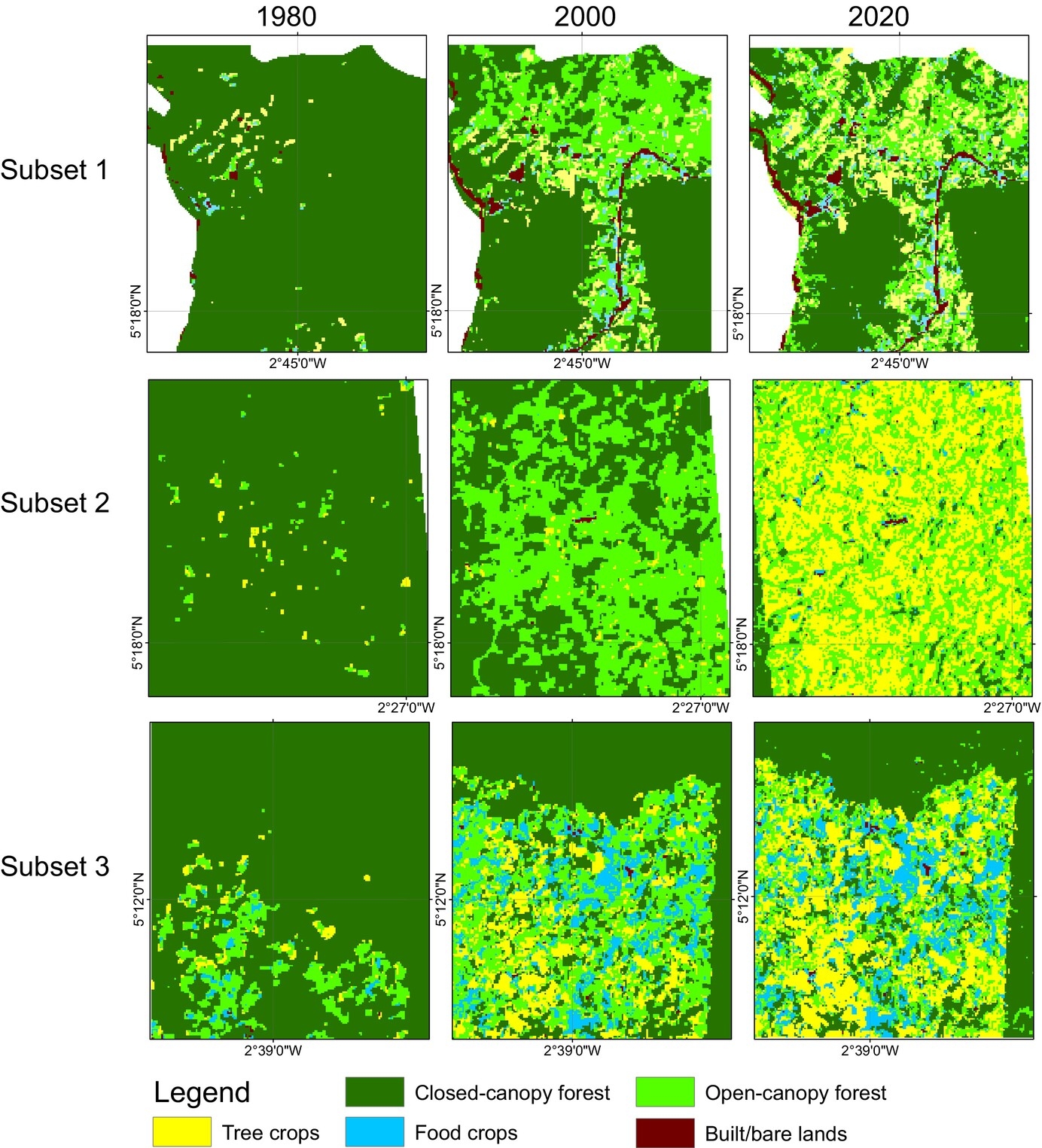
The research, led by Dr. George Ashiagbor, examined land-use changes around the Ankasa Conservation Area and the Bia Conservation Area using satellite imagery collected over four decades.
Findings from the study, published in the journal Ecology and Evolution, indicate that forest cover in the Ankasa Conservation Area declined by 16.4 percent, falling from 100,941.6 hectares in 1980 to 84,410.6 hectares in 2020.
Similarly, forest cover in the Bia Conservation Area decreased by 14.4 percent, dropping from 70,211.8 hectares to 60,117.36 hectares over the same period.
Although the study found no direct agricultural encroachment within the protected areas, farming activities have expanded considerably within a five-kilometre buffer zone surrounding the reserves.
The researchers warn that continued forest fragmentation could reduce habitat productivity, increase human–wildlife conflict, and gradually degrade protected ecosystems, particularly as population growth intensifies pressure on land resources.
The study therefore highlights the urgent need for ecological restoration and stronger conservation interventions to protect forest habitats in the surrounding landscapes.
It also calls for closer collaboration with communities under the Community Resource Management (CREMA) Area Programme, encouraging sustainable land-use practices that balance agricultural livelihoods with biodiversity conservation.


Comments