
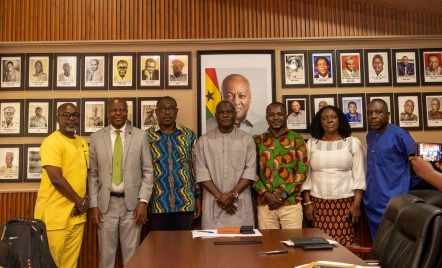
The Institute for Rural Development and Innovation Studies (IRDIS) has paid a courtesy call on the Ministry for Local Government, Chieftaincy and Religious Affairs (MLGCRA) to formally introduce itself and reaffirm its long-standing collaboration with the Ministry.
The visit also aimed to strengthen engagement between the two institutions and explore strategies to positively impact rural communities through the implementation of the National Rural Development Policy (NRDP), as outlined in the Memorandum of Understanding (MoU) between IRDIS and the Ministry.
The delegation was led by the Director of IRDIS, Prof. Ebenezer Owusu-Addo, alongside the Provost of the College of Agriculture and Natural Resources (CANR), Prof. Dadson Awunyo-Vitor.
Speaking during the engagement, Prof. Owusu-Addo highlighted the Institute’s core mandate of championing rural development.
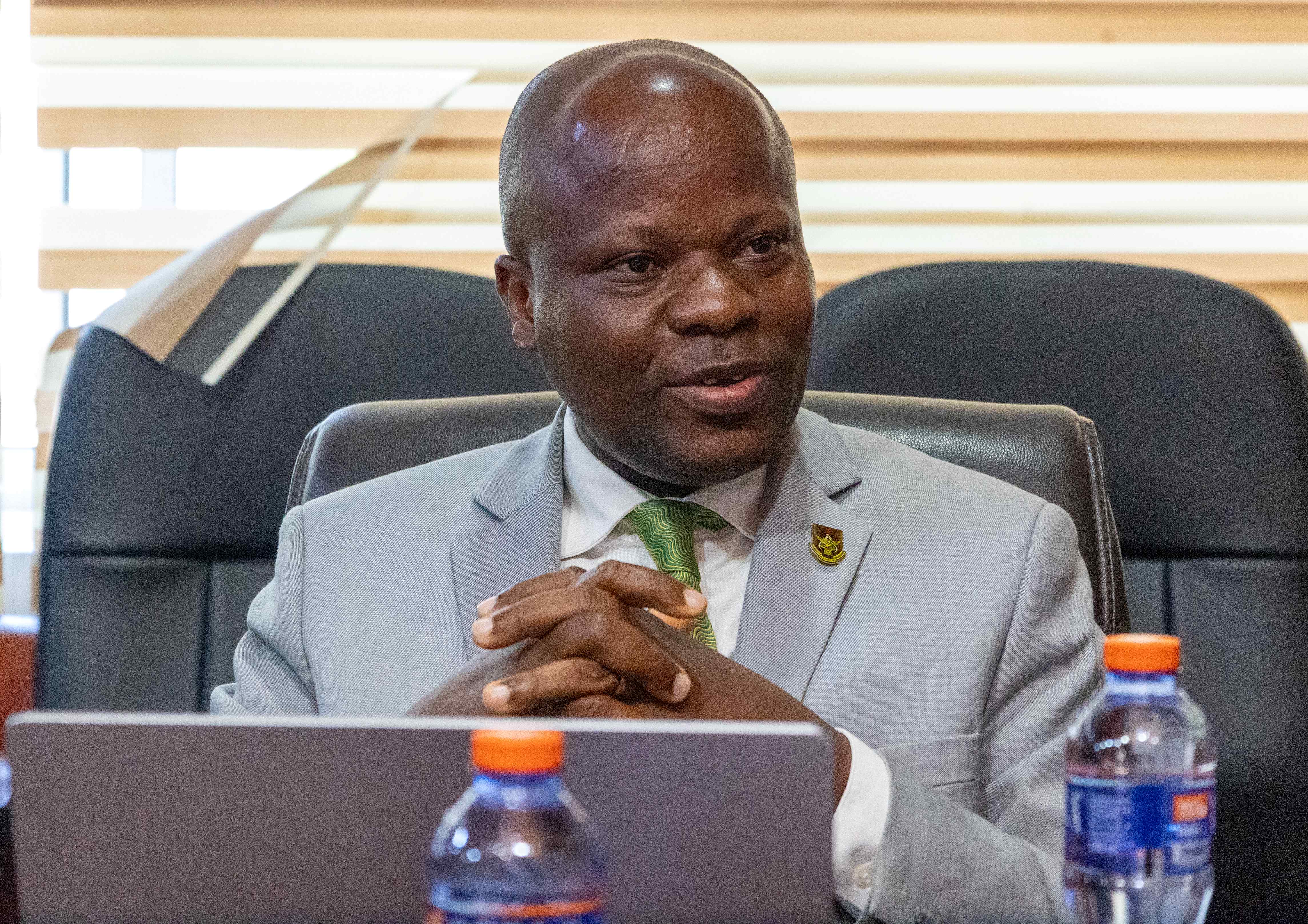
“Our primary focus is rural development. That is what we stand for, and that is why the University established the Institute, to promote rural development.
Rural areas are endowed with immense resources, and the critical question is how we harness these resources to drive socio-economic development,” he said.
He explained that IRDIS works collaboratively across all six colleges of KNUST, drawing on interdisciplinary expertise to address rural development challenges.
He emphasized that the Institute’s cross-college approach aims to create more structured and conducive development environments in rural Ghana.
“Rural areas are often left within the informal sector, creating development gaps that require deliberate attention. We want to focus on these areas to ensure a more enabling environment for rural communities,” Prof. Owusu-Addo added.
He further disclosed that discussions with the Ministry over the past two years have focused on producing a comprehensive report on the “State of Rural Economy” in Ghana.
The report is intended to provide evidence-based insights into rural conditions and guide development partners in mobilizing resources to support rural development initiatives.
Prof. Owusu-Addo also revealed that IRDIS is considering introducing a graduate programme in rural development, which would closely align with the Ministry’s mandate and the NRDP.
In response, the Minister for Local Government, Chieftaincy and Religious Affairs, Hon. Ahmed Ibrahim, welcomed the engagement and reaffirmed the Ministry’s commitment to deepening collaboration with IRDIS and KNUST.
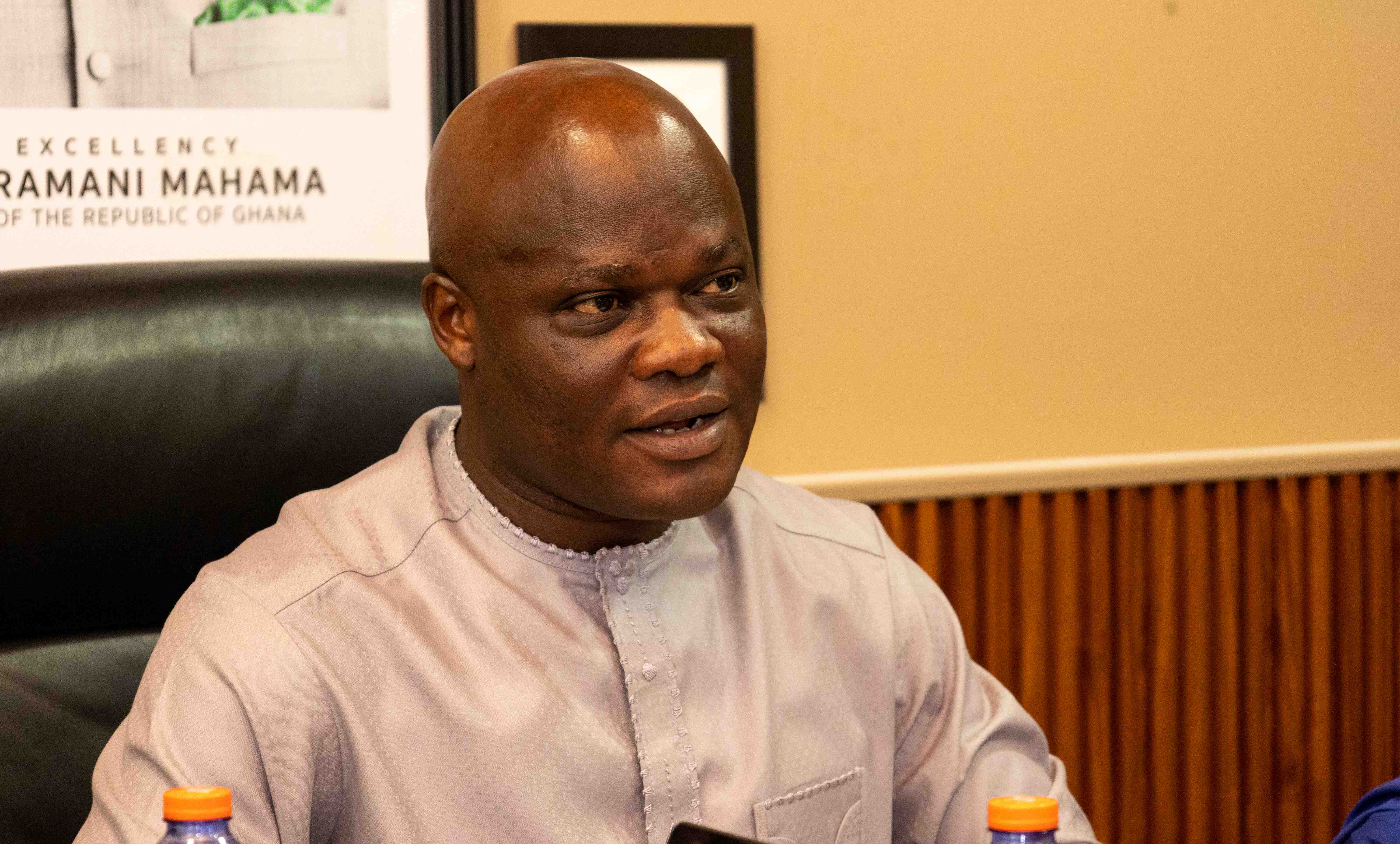
“Our municipal authorities will work directly with the Institute, and together we will explore practical ways to partner and address rural development challenges,” the Minister said.
He described himself as a strong advocate of rural development, noting his extensive work and publications on rural–urban migration and its negative socio-economic consequences.
“I believe this collaboration presents an opportunity to change the narrative. If we act deliberately and timely, we can significantly address the drivers of rural–urban migration,” he added.
The Minister reaffirmed the Ministry’s commitment to working closely with IRDIS to ensure that the revised National Rural Development Policy effectively responds to the evolving needs of rural communities and remains aligned with national development priorities.
Also present at the meeting was Dr. Thomas Yeboah, a Research Fellow at IRDIS.



Comments