
Postharvest losses remain one of the most pressing threats to sustainable food security, economic growth, and environmental stability across sub-Saharan Africa.
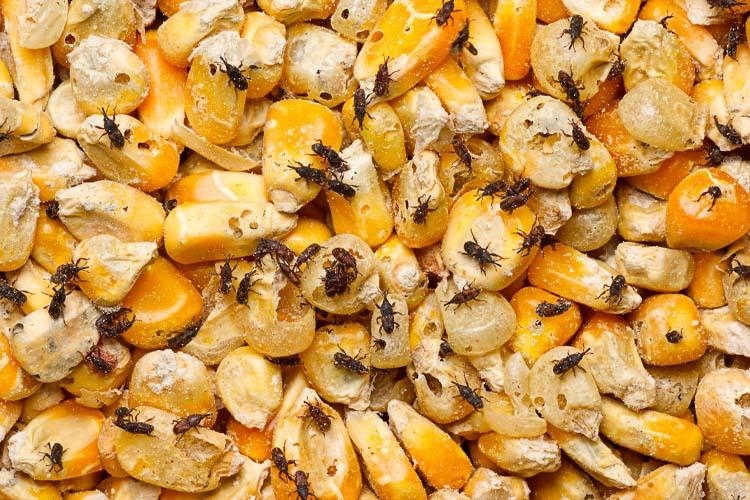
In Ghana, where maize is a staple crop, farmers continue to grapple with destructive storage pests, particularly the maize weevil and the larger grain borer.
For years, many farmers have relied on traditional grain storage techniques, including polypropylene sacks, jute bags, cribs and barns.
However, these methods have proved largely ineffective and often create favourable conditions for pest infestations.
Chemical-based preservation methods, though widely used, also present their own challenges.
The Purdue Improved Crop Storage (PICS) bag has emerged as a viable alternative.
Introduced to Africa in 2007 with support from the Bill and Melinda Gates Foundation, the PICS bag offers a chemical-free method of grain preservation by creating airtight conditions that inhibit pest survival.
Despite its proven effectiveness and widespread acceptance in several African countries, adoption among Ghanaian maize farmers remains low.
To address this gap, a study conducted by the College of Agriculture and Natural Resources (CANR) assessed farmers’ awareness of the PICS bag, their perceptions of its attributes, and the factors influencing its adoption.
The study also examined the current adoption rate and projected how uptake could improve with increased exposure.
Findings reveal significant gaps in awareness. Although 52% of farmers in the study area had been exposed to technology, only 24% had adopted it.
Further analysis suggests that nearly half of all maize farmers would have embraced the PICS bag if they had been adequately exposed to it.
To accelerate adoption, the researchers, led by Faizal Adams, call for intensified awareness campaigns and improved access to the technology.
The study was published in the Journal of Food and Energy Security


Comments