
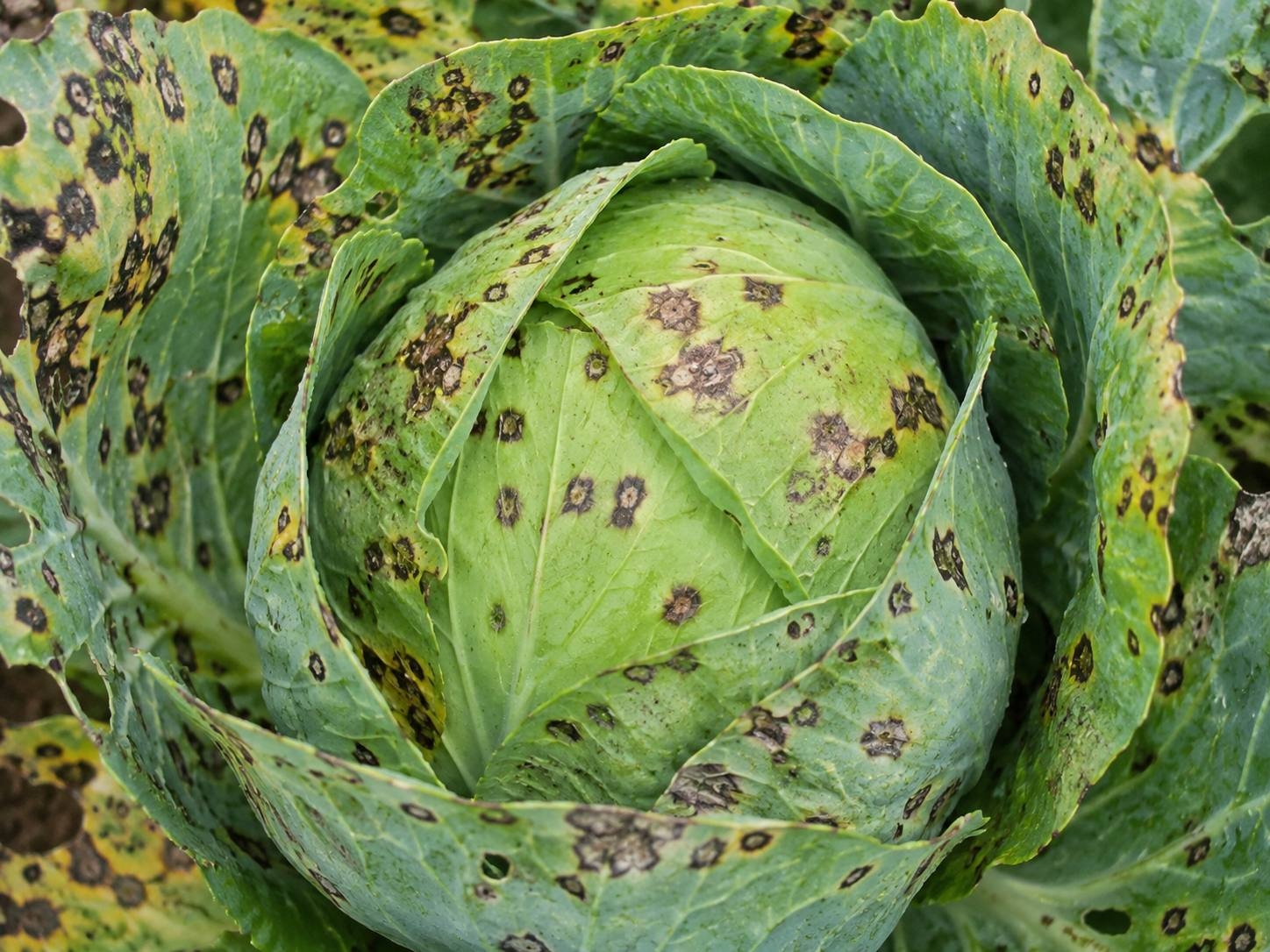
A study by the College of Agriculture and Natural Resources (CANR) has found that despite high awareness of Cabbage Leaf Spot disease (CLS) among farmers in the Ashanti Region, key knowledge gaps and socio-economic constraints continue to undermine effective control.
CLS remains a major challenge to cabbage production in the region and can cause significant yield losses when not properly managed.
Researchers led by Mr. Godfried Ohene-Mensah surveyed 142 cabbage farmers across five districts in the Ashanti Region during the 2022–2023 cropping seasons to assess farmers’ knowledge and management practices.
The study found that nearly all farmers could identify CLS symptoms in the field.
However, many lacked knowledge of its causes, early detection, and proper fungicide timing and rotation.
Farmers largely depended on fellow farmers for information, with limited extension support restricting access to technical guidance.
As a result, fungicide use, the most common control method, was often based on experience or peer advice rather than recommended practices.
The study also identified major constraints, including limited access to disease-resistant varieties, high input costs, low education levels, and gender disparities in access to resources and support services.
To improve control of the disease, the researchers recommend strengthened extension services, farmer training, mobile advisory platforms, farmer field schools, and community surveillance systems for early detection and response.
They also call for increased investment in disease-resistant varieties and gender-inclusive policies to improve access to seeds, inputs, and training.
The findings were published in Scientific African.
Cabbage leaf spot control hampered by knowledge gaps
News
Research
| Published: 18th June 2026
Share


Comments