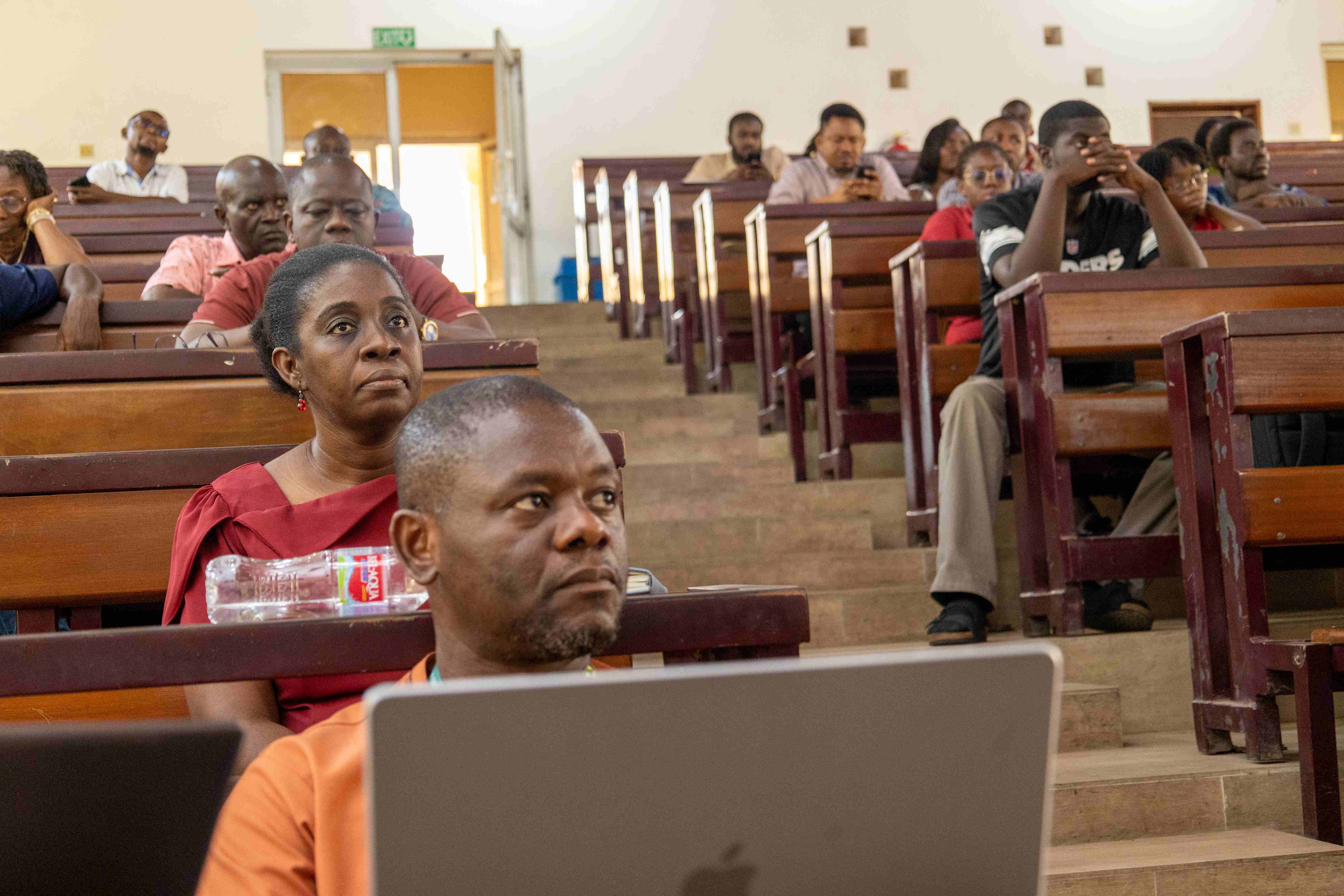
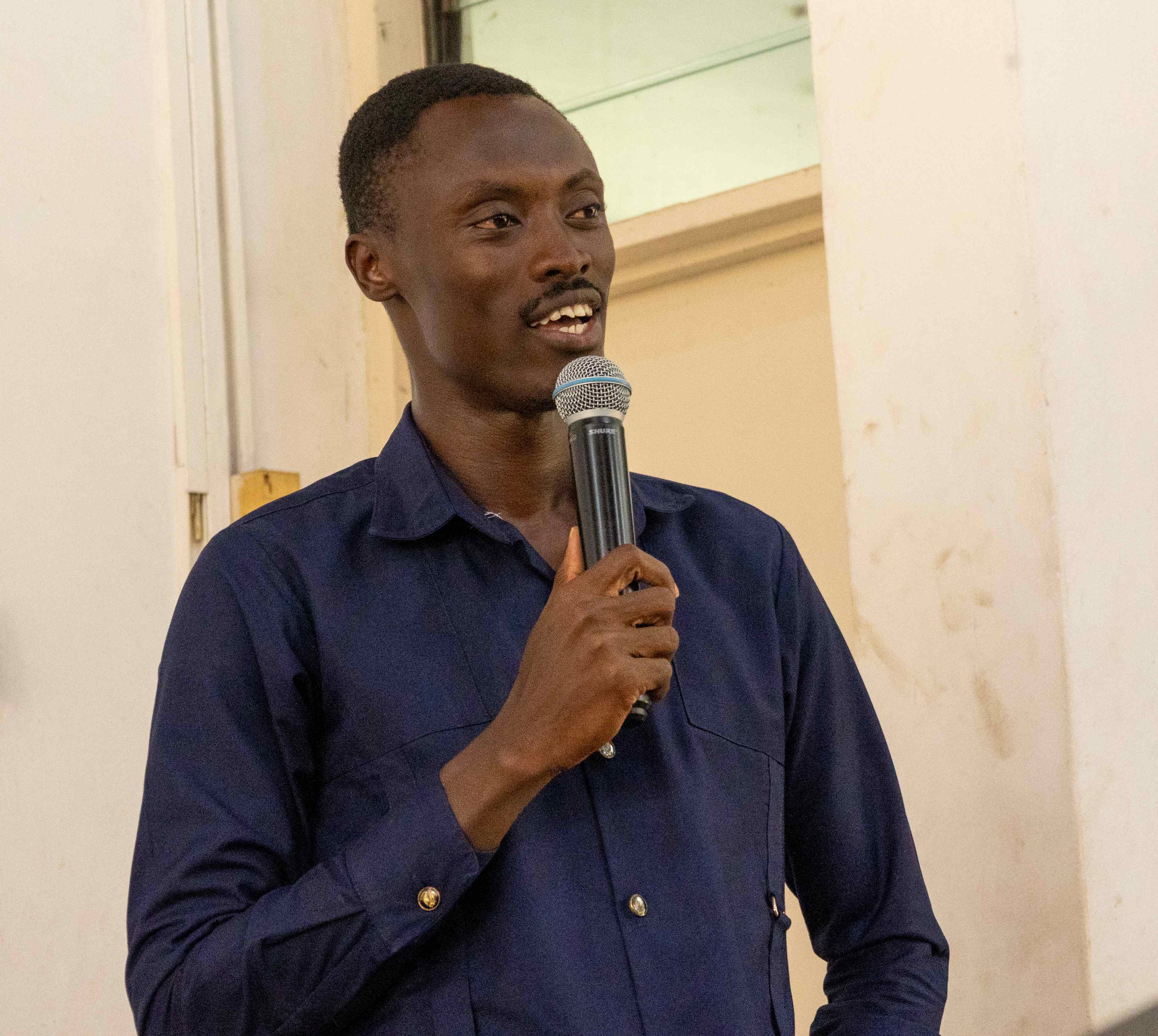
Frank Owusu, an alumnus of the Faculty of Renewable Natural Resources, has showcased a suite of digital innovations designed to transform aquaculture production in Ghana and beyond.
Speaking at the Faculty’s weekly seminar, the Founder and CEO of Aquamet highlighted how emerging technologies such as artificial intelligence (AI) and remote sensing are reshaping farm management practices.
He explained that his company, a youth-led and inclusive startup, develops climate-smart solutions to address some of the key challenges facing the aquaculture industry through the use of digital technologies.
“Our solutions are designed to reduce costs, improve yields, and enhance the incomes of fish farmers and other actors along the value chain,” he said.
“The first product we built was a smart water quality device, the Aquamet Smart Pool. We developed it with the aim of providing farmers with a low-cost device capable of remotely monitoring water quality,” he added.
The device and its accompanying software infrastructure were designed and developed entirely in Ghana, including components produced through 3D printing.
It provides automated recommendations to farmers whenever water quality readings fall outside optimal ranges.
“It goes beyond just providing data. The system delivers actionable recommendations. If your water quality is out of range, the app tells you exactly what to do,” he explained.
Since its inception, Aquamet has worked directly with 174 fish farms and reached over 750 farmers nationwide through workshops and field deployments.
The company is currently exploring expansion into Nigeria and Côte d’Ivoire and collaborates with more than eight partners, including development agencies and research institutions.
Looking ahead, Mr. Owusu noted that scaling the innovation will require strategic partnerships and sustained investment in high-fidelity technology infrastructure.
The seminar provided students and faculty members with valuable insights into how digital transformation is driving efficiency, sustainability, and resilience within Ghana’s aquaculture sector.
It also featured an engaging interactive session during which students and faculty members asked critical questions about the technology, its scalability, and its long-term impact on the industry.


Comments